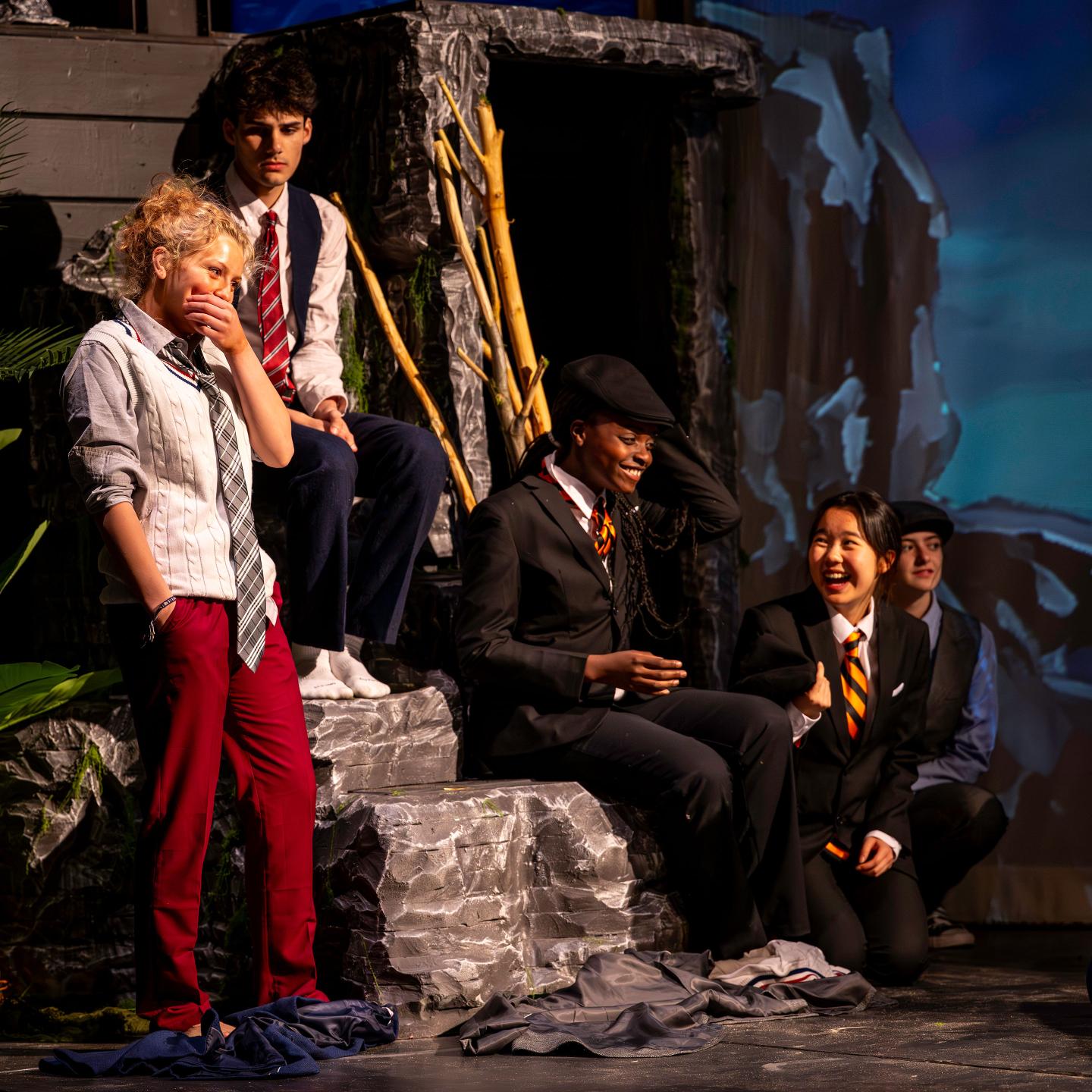
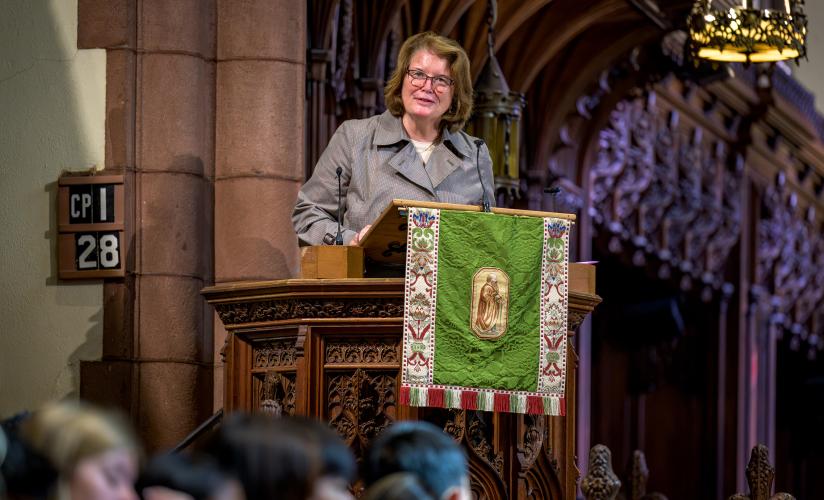
Third Former Catherine Allen ’29 wins the Hugh Camp Cup with a speech about vulnerability, performance, and refusing to let fear of judgment hold you back.
BY KATE DUNLOP
The Hugh Camp Cup speech competition was established by the formmates of Hugh Nesbitt Camp III, a member of the Form of 1918 who died at his family’s summer home in 1916 after a few days’ illness. Though the Horae Scholasticae sharing the news of his death described Camp as “retiring of nature, too shy to gain friends easily,” it’s likely he would have been at least acquainted with Philip Allen Jr., a member of the Form of 1915.
This year, Allen’s great-great-niece, Catherine Allen ’29, won the Hugh Camp Cup in its 100th year with her speech about overcoming the fear of embarrassment and embracing the inherent risk of putting yourself out there for others to judge. Drawing on her own journey from a reluctant middle-school musician afraid to appear before peers to a confident performer ready to take the stage anywhere, she argued that putting yourself in uncomfortable positions is essential to growth.
“I am almost entirely incapable of catching moving objects, I can’t remember the last time I lifted something over 50 pounds, and I finished only three of 12 available cross-country races in the fall,” Allen said in her speech. “I would be way too embarrassed to get up here and tell you all those things if I happened to care about sports. Luckily for me, I don’t, and I learned from a lot of long and unsuccessful sports seasons as a child that sometimes it’s best to admit you aren’t built for certain things and move on. …That is how I found what I am good at: being on stage.”
Early on, though, she didn’t want to perform in front of anyone who might know her, and certainly not her peers, lest they judge her. Enter the minkles, a terrifying group of “the prettiest, meanest and most socially connected girls” at Allen’s “unfortunately small public middle school.” They walked into the restaurant where a 12-year-old Allen was performing her first paid solo music gig and things went downhill fast, musically. Back in school on Monday, things went downhill socially, when the minkles caught up with her in math class.
These days, avoiding life’s minkles is no longer Allen’s tactic.
“I’ve let [my fear of embarrassment] stop me from a lot of things … but in a bigger sense, I’ve let it push me … even when it feels as though I’m surrounded by minkles,” Allen says. “As high school kids, we’re constantly aware of how much everyone is forming opinions about us. … Everybody is judging you, all the time, for every single thing you do. And this will not stop, ever, not even with changes in status, age, or social connection: You will never be immune to embarrassing yourself. …But the secret behind embarrassment is taking it into your own hands. You need to embarrass yourself … Because for the majority of decisions you will make in life, there will be minkles: people who will doubt you, or think you are weird.”