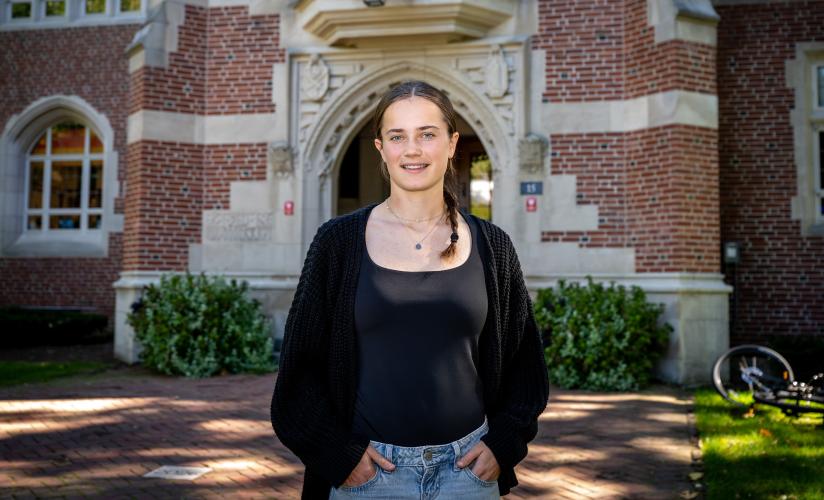
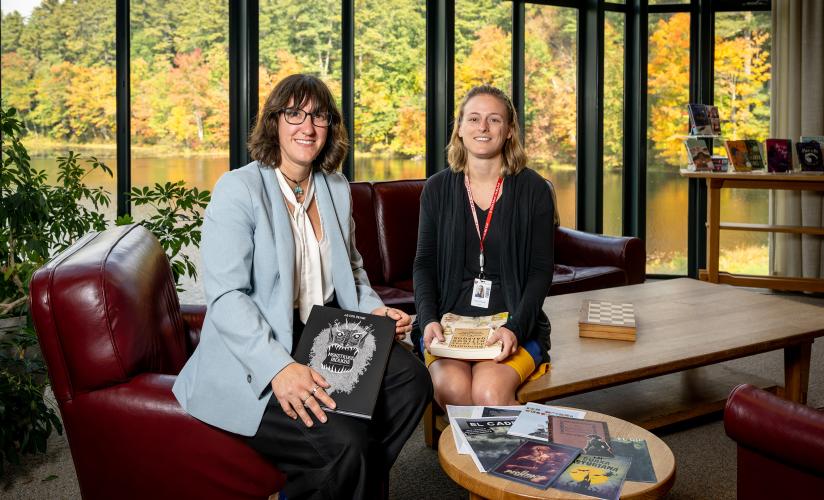
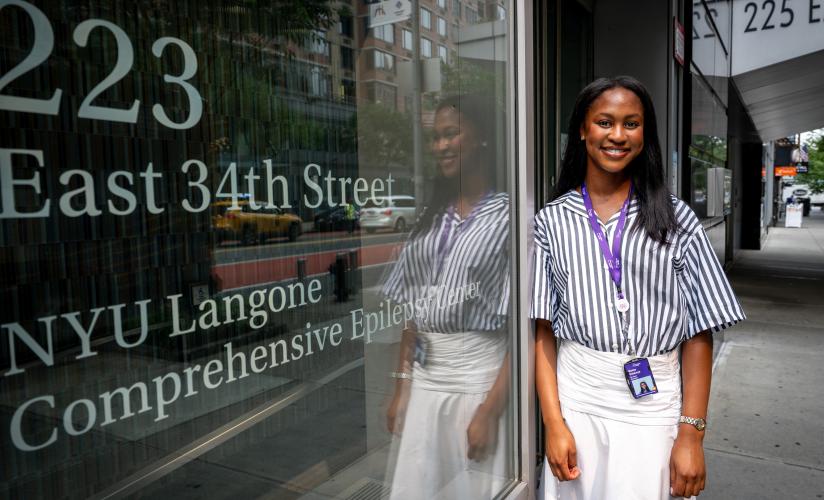
For Iris LaMoreaux ’27, a St. Paul’s School education means pursuing STEM and the humanities, varsity athletics, student journalism, service, and more — and discovering how those interests connect.


Danny Freeman ’09 discovered who he was and learned to embrace his identities at SPS; now, he’s a CNN correspondent who covers some of the country’s most complex political stories.
BY KATE DUNLOP
Emmy Award-winning journalist and CNN correspondent Danny Freeman ’09 returned to Millville Sunday, Oct. 4, and Monday, Oct. 5, for a campus visit 21 years after he arrived as a Third Former.
In his chapel talk Monday morning, Freeman, who was born in the United States to a Colombian mother and then adopted by Jewish parents in New York, told students that SPS was pivotal in learning to be proud of being both Latino and Jewish. He found family among his diverse housemates in Coit North and gained confidence and pride in what he calls his unusual mixed heritage. Now, from his base in Philadelphia, he covers some of the country’s most complex political stories for CNN.
“There is a lot of uncertainty in this world right now among people who look like me, believe like me, with whom I identify,” he said. “But because I learned to love my own mixed identities 21 years ago, right here in Millville, I am proud, and I am privileged, to dive headfirst into these stories while also staying empathetic and grounded … the work must be guided by truth, honesty first and foremost, [and] objectivity as well.”
Freeman, who joined CNN in 2023 after nearly a decade in journalism around the U.S. and in Colombia, won regional Emmy Awards for reporting on the 2022 Pennsylvania Senate race and NBC San Diego’s 49th District Congressional Debate in 2018. He has covered a number of high-profile Pennsylvania stories, including the 2024 election, the capture of the accused UnitedHealthCare CEO shooter, manhunts for prison escapees, the federal trial of the Pittsburgh Synagogue shooter, and the assassination attempt of then-former President Donald Trump.
“This St. Paul’s community made me a better journalist, a better friend, a better family member, and incredibly, a better Latino and a better Jew,” he continued. “So, my advice to all you students … is, while you’re here in this beautiful community with incredible teachers, coaches, mentors, and formmates … [don’t] neglect learning who you are, embracing yourself, and loving all parts of you … because the best people you will ever meet in your life who will help you do that are sitting in this room today and it will help you succeed and do better in life.”
Freeman also joined Humanities Teacher Abbey Edwards’ and Chris Carter’s American Elections I and II classes, met with the student writers behind The Pelican and The Partisan as well as members of the a cappella group (Freeman was a member of the Dartmouth Aires and competed on “The Sing-Off” in 2011, finishing as runners-up to Pentatonix), and connected with members of the Hillel and Latinx Societies over meals in the dining hall.
In Carter’s class, seated at the Harkness table with 12 students from seven states and Ukraine, Freeman retained their names immediately after introductions and dove into a lively 45-minute discussion of their reading and class projects, his trajectory and the work of being a journalist, and the shifting political landscape ahead of the upcoming mid-term elections.
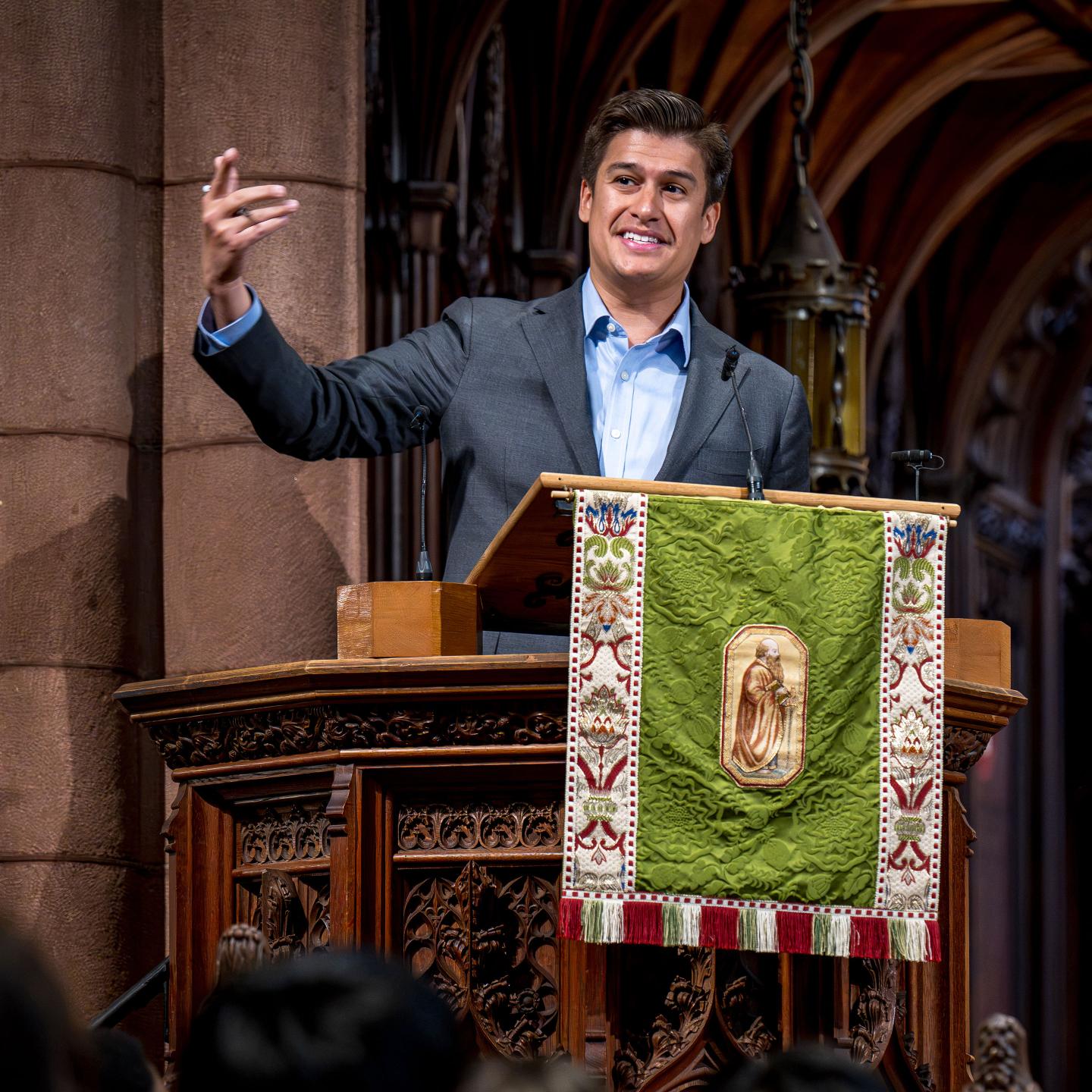
Don’t neglect learning who you are, embracing yourself, and loving all parts of you … because the best people you will ever meet in your life who will help you do that are sitting in this room today.
Hudson Fornes ’28 said that the class is one of the few places where she gets to discuss politics and reflected later that meeting Freeman helped her imagine where her own interest in the topic could take her. “I appreciated the opportunity to extend those conversations to someone who covers the news professionally,” she said. “It was really amazing to see how the political issues we study in class are communicated to the public.”
For Hugo de Saint-Aignan ’27, Freeman’s message of finding meaningful community and pride in his identity resonated with him and his own St. Paul’s experience, adding that, “his approach to journalism and politics was hopeful as our class reflected on bias in the media and political polarization.”