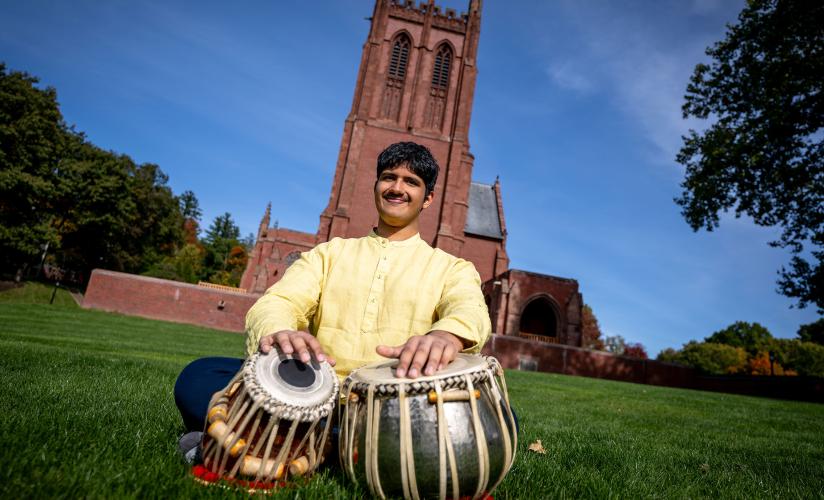
Tejas Karthik ’28 brought a lifelong love of tabla to Millville — then found a community where music, friendship, and a willingness to try something new opens unexpected doors.


The day’s learning was devoted to the civil rights activist’s life and legacy
BY KATE DUNLOP
The St. Paul’s School community gathered on Monday, Jan. 19, to celebrate the birthday and legacy of Rev. Dr. Martin Luther King Jr. with song, readings, discussions and performances.
The day’s programming began with a chapel service that included faculty members and the Chapel Choir alongside special guests the Rev. Mariama White-Hammond, founding pastor of New Roots African Methodist Episcopal Church in Dorchester, Massachusetts, and Camerata Baltimore, a Maryland-based professional choir that promotes the choral arts and is a frequent element of the School’s MLK Day celebrations.
The service also included a reading from the essay “MLK’s Last Sunday Sermon is as Relevant Today as it Was in 1968,” which describes the message King shared four days before his April 4 assassination. In his final sermon, King had spoken about the “great revolution” Rip Van Winkle missed during his 20-year sleep — when it started, King George ruled the land; when it ended, George Washington was president — and what it meant to miss out on something so important. King’s message in part was that, “all too many people find themselves living amid a great period of social change, and yet they fail to develop the new attitudes, the new mental responses, that the new situation demands.”
In a chapel talk that built on King’s message, White-Hammond noted that the story of Van Winkle is “a fate that can await anyone who doesn’t speak up in a revolutionary moment, because while change is inevitable, progress is not.
“Sometimes the world moves forward because people show up and sometimes it moves backward because good people decide it’s too hard and they check out,” she said. “This is true for everyone, but it’s particularly true for young people. Mass movements for justice and progress absolutely require the energy and innovation of young people. This moment is no different … [and] we have plenty of modern ways of falling asleep. We’re working, doom scrolling, video games, obsessive productivity … even prayer can be a distraction if it never leads you back to the world.”
This question of seeing and belonging, White-Hammond said, is a struggle of our time and echoes King’s words that “we must all learn to live together as [siblings] or we will all perish together as fools.”
“Do we actually believe that ‘we the people’ means all of us? Do we believe there is enough dignity, safety, opportunity and love for everyone?” she asked. “Or do we believe that some people have to lose in order for others to win? … Can we see each other and can we choose to belong to each other?”
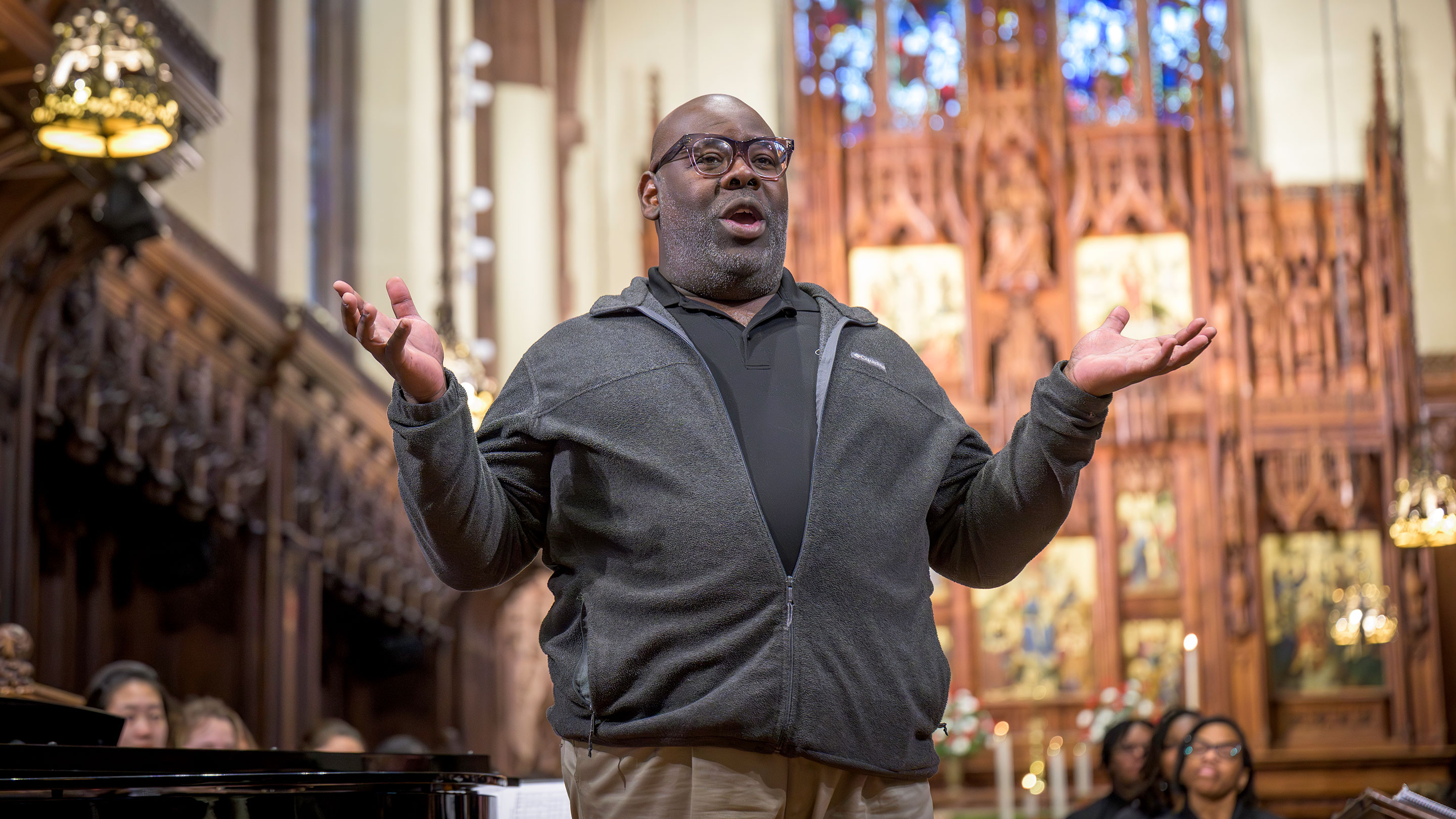
After chapel, students gathered by form to view and discuss documentaries with faculty members; in the afternoon, Camerata Baltimore’s energetic performance in Memorial Hall brought the School community to its feet. As in past years, the choir’s performance was followed by cupcakes in honor of King’s birthday.
Director of Building Beloved Community Initiatives Bethany Dickerson Wynder described the day as one of meaningful connection. “We were blessed by a meaningful homily preached by the Reverend Mariama White-Hammond; the community was fully engaged and moved by her message,” she said. “Camerata Baltimore’s partnership with the SPS Choir and its director, Nicholas White, was a significant contribution to a special chapel service.”