Sixth Former James Buchan has a future with the Ontario Hockey League’s Peterborough Petes — but he wants to graduate from St. Paul’s School first


St. Paul’s School hosts visitors from the Bishop John T. Walker School for Boys for two days of reflection, learning and connection.
BY KATE DUNLOP
On Jan. 12-13, St. Paul’s School hosted a delegation from the Bishop John T. Walker School for Boys, an elementary school in Washington, D.C., established in 2008 and named for the first Black faculty member at St. Paul’s School.
During their two days in Millville, Dr. Angelina Arrington, head of school; Brian Harris, director of outplacement and alumni support; and Canon Preston Hannibal, an SPS faculty member from 1974 to 1986 and one of Bishop Walker School founders, toured the campus, observed classes, and met with students, faculty members and School leaders.
In chapel on Monday morning, Rector Kathy Giles, who spent time at Bishop Walker School in early 2020 and spoke about the experience in her Graduation remarks in 2022, introduced the visitors and noted that the Concord and D.C. school communities are so connected that they share the same school prayer.
“I suggest that in the work they do every day, our visitors embody the values that St. Paul’s School and that Bishop Walker School share: kindness, unselfishness in friendship, thoughtfulness of those less happy than ourselves and eagerness to bear the burdens of others,” Giles said. “And in that eagerness, they work every day to serve the greater good and in so doing make that good greater for the boys at Bishop Walker School and for their families, for the community in which they engage daily and for the future. Because young people, students — scholars, as they are known at Bishop Walker School — are the future of the world. And as we all know, the more good we make, the better.”
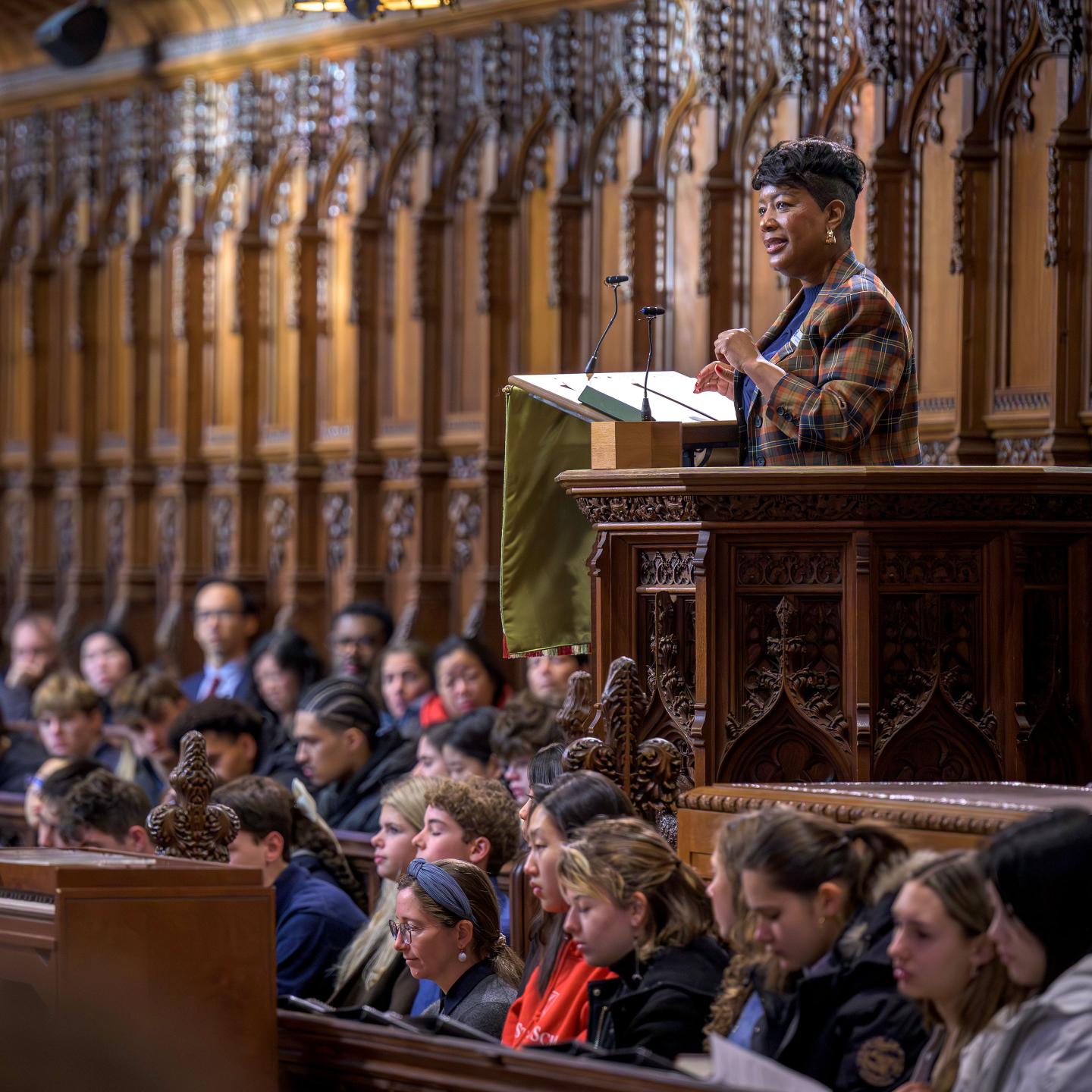
Arrington, a fourth-generation educator who has taught every grade from pre-K to college in a full- or part-time capacity, delivered chapel remarks that asked the School community to think about who they are choosing to be, moment to moment, when nobody’s watching, because a life is the sum of repeated choices — and also to consider who they are when they have influence.
Service is how you use your power. You may not think you have power, but you do.
An introvert who considers herself a servant leader, Arrington shared how she’s honed her observation skills in the service of inclusion since childhood — noticing from a young age who was left out and inviting them in, making sure they had a sense of belonging and safety. It’s what she still strives to do.
“Service is how you use your power. You may not think you have power, but you do. Power can look like different things, like humor, academics, empathy, joy. It can look like athletic status. It can look like being a musician or a great singer. It can look like confidence. It can look like the ability to connect, to observe,” she said. “When you have this power, the question you can ask yourself is, “Do people feel safer around me or smaller?’ I always ask myself, ‘Am I using my power to make people feel safe or am I using my power to make people feel smaller?’ As a servant leader, I believe my service to my community is making people feel safe and confident and heard.”
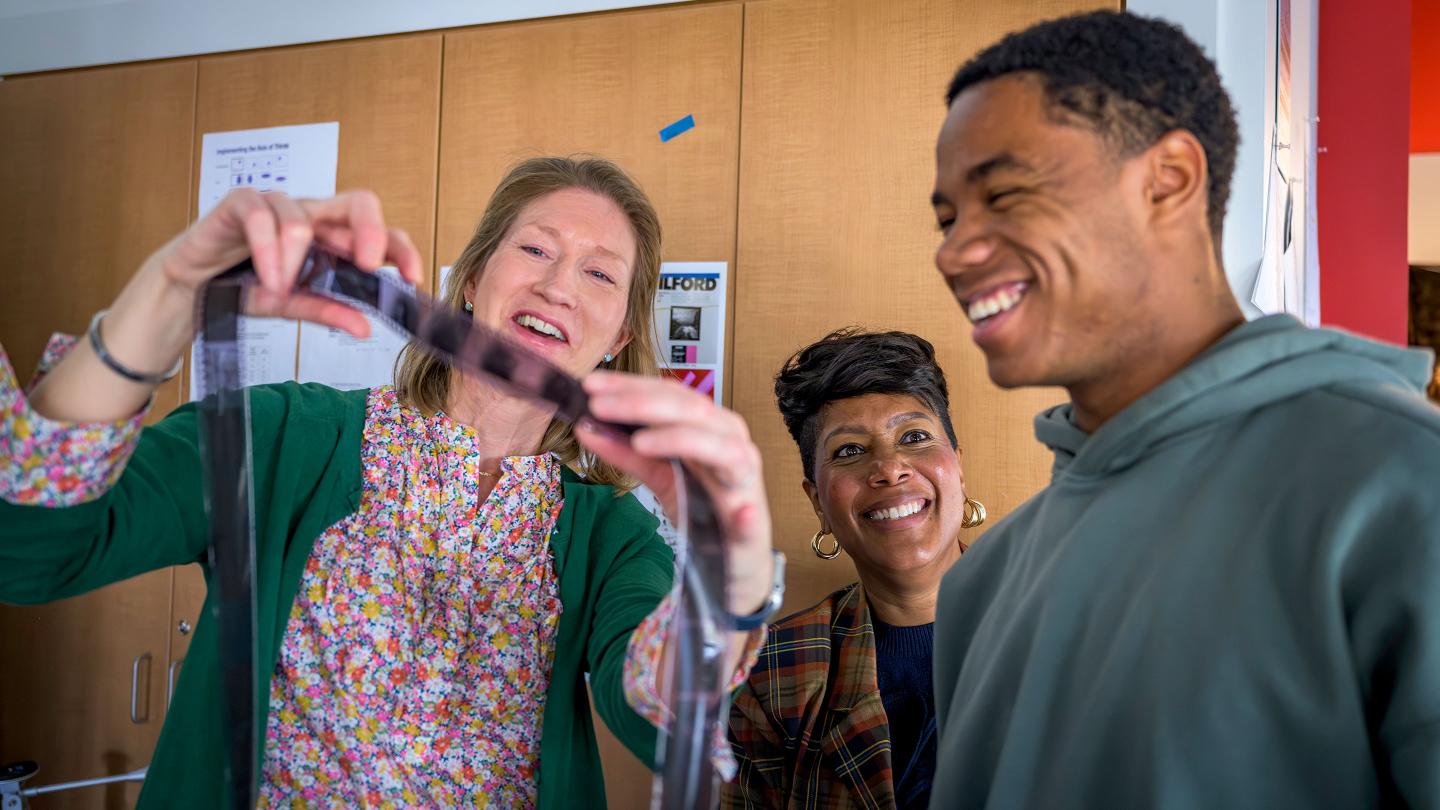
On Tuesday morning, chapel was held in Memorial Hall, where Arrington and her colleague Harris shared videos to illustrate their work and the structure of Bishop Walker School. The independent school offers its 80 students full tuition support and aims to “alter the educational and social trajectory of children from historically underserved communities, preparing them for leadership and service in their communities and well beyond.” It is rooted in the traditions of Episcopal education, current research on boys’ social and intellectual development, a progressive educational approach, and the educational philosophy of Bishop Walker.
The late Bishop Walker P’90 came to St. Paul’s School in 1957 to teach history and stayed until 1966, when he left to become canon of the National Cathedral in Washington. In his history “St. Paul’s: The Life of a New England School,” August Heckscher ’32 notes that he “returned often to the School to confer with minority students, and in 1972 became a member of the board of trustees,” a position he held until 1989. In 1977, he became the first Black bishop of the Episcopal Diocese of Washington, serving until his death in 1989.